
Implications of a War with Iran: Who Benefits and Who Will Pay the Price?
If There Are No Nukes, What Exactly Are We Risking War With Iran For?

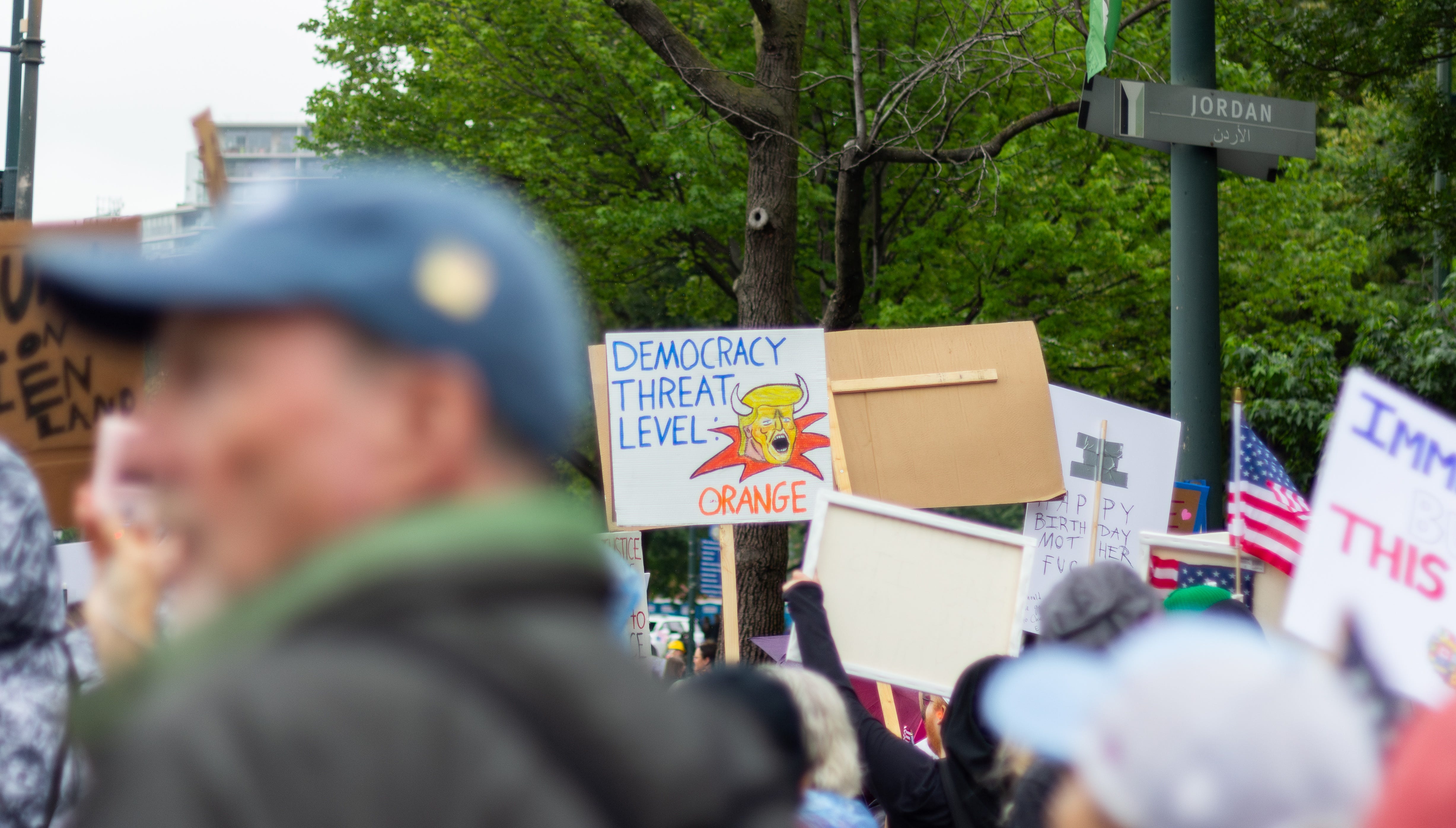
Why should United States citizens worry about entering into direct conflict with Iran? What exactly are the implications?
I compiled this Q&A to provide a [hopefully] understandable explanation.
The most important consideration, in my opinion, should be for humanity. War poses a significant threat to all humankind. People are suddenly forced into immediate tactical survival mode and uncertainty. But add in an element of imminent danger by way of missile strikes, drone strikes, and other attacks—it’s just not good for our livelihood or our souls.
I believe we have a right to live our lives without fear; without being subjected to danger by our own governments; without being thrown into senseless wars by men who don’t seem to realize that they have expiration dates, too.
However, the threat to humanity is not the only risk. Let’s take a look at a few others.
In July of 2015, the Joint Comprehensive Plan of Action (JCPOA), headed by President Obama’s Secretary of State John Kerry and Secretary of State for Political Affairs, Wendy Sherman, was enacted.
Here is the full text of the agreement, but it’s lengthy, so I’ll lay out a few key points.
What was the JCPOA?
Iran signed onto the agreement (implemented in January of 2016), promising the creation of a peaceful nuclear program, essentially allowing for “responsible” proliferation under stringent international laws, rules, and regulations.Though the agreement set limitations on the amounts and types of nuclear weaponry they were allowed to produce, it still gave Iran “permission” to move forward with their nuclear research and development and to obtain uranium, plutonium, and other necessary natural resources without the threat of sanctions or retaliation. The agreement solidified the understanding that cooperation between the countries involved would be met.
Why is the desire for nuclear weapons so strong? Despite the environmental and physical risks of harm, possessing nuclear capabilities would give Iran a sense of protection and belonging; a seat at the nuclear table, if you will.
Essentially, the plan allowed Iran the freedom to develop an arsenal to further protect its national interests through deterrence. And with a general understanding of mutually assured destruction (in conflict, a country is less likely to strike if they know that the other also has the power to strike back), nuclear-equipped nations are more willing to accept that risk. Mutually assured destruction (MAD) is essentially its own built-in safety mechanism. No one wants nuclear war.
Now, this all may seem counterintuitive to people like you and me, but that’s because there’s another intersectional conversation to be had regarding proliferation, non-proliferation, environmental risks of destruction and destabilization, etc. Unfortunately, I don’t foresee nuclear power ever entirely disappearing.
Donald Trump pulled out of the JCPOA in May of 2018. This is important to note.
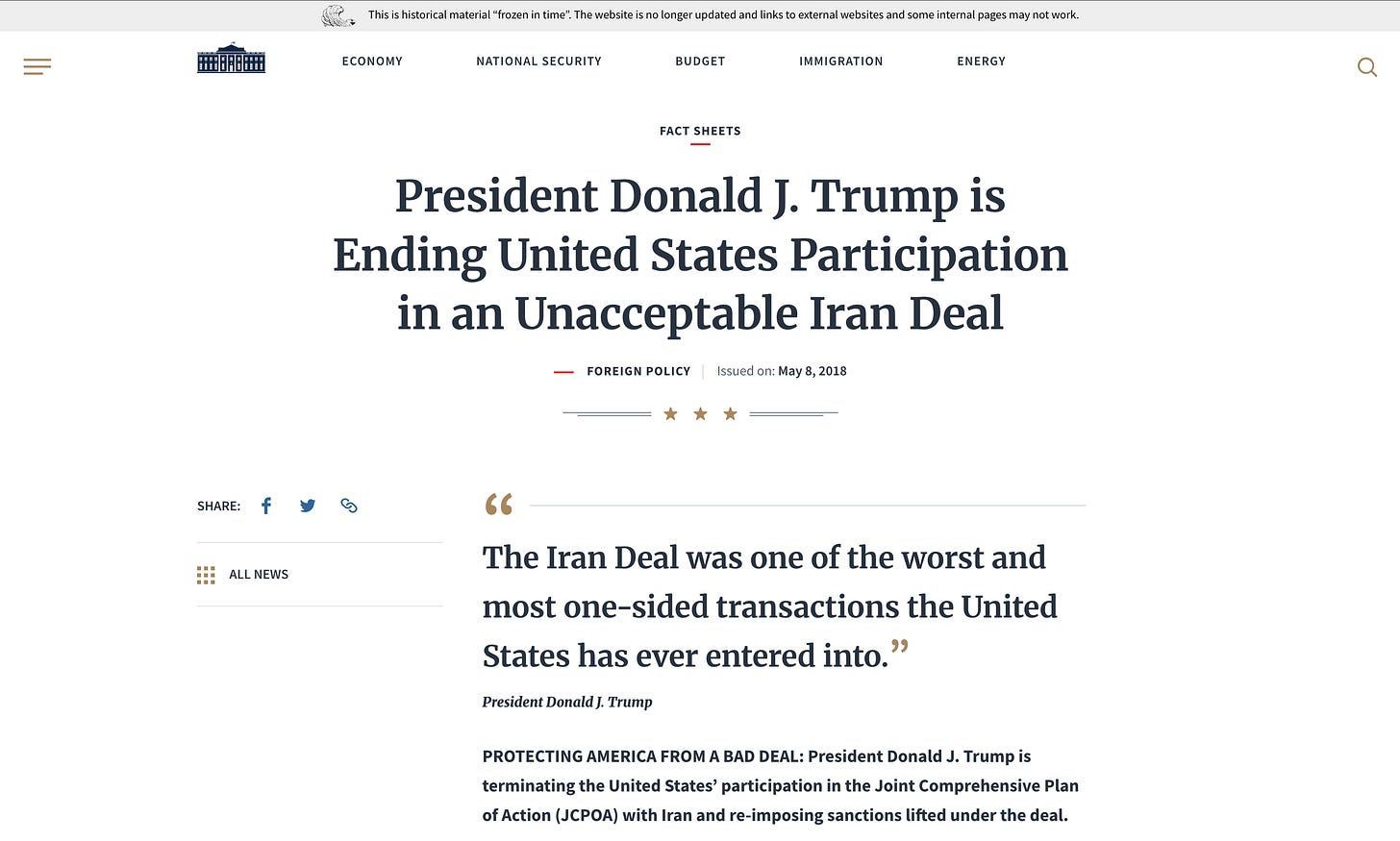
Due to this retraction/undoing, Iran was immediately subjected to sanctions from the [1.0] Trump regime. However, pulling out of that agreement meant that Iran no longer had to follow the rules, essentially giving them the autonomy to build a weapons arsenal on their own terms, without any guardrails or rules in place.
What weapons does Iran currently have, and what are their capabilities?
Iran’s arsenal—one of the largest in the Middle East—primarily consists of ballistic missiles and drones. Their ballistics fall into the small to mid-range size, with ranges long enough (up to 2,000 km) to reach Israel, but not nearly long enough to reach, say, the U.S.
So, what should we be concerned with if Iran’s weapons don’t pose a physical threat to the U.S.?
America’s presence is established in several corners of the world, including the Middle East, with U.S. embassies, government entities, and military installations strategically embedded throughout. Unfortunately, Iran’s missiles do have the capability to reach some of those establishments should they attempt to strike. This puts our troops, diplomats, and other overseas personnel at risk, hence why many have been given the green light to evacuate (of course, without assistance from the U.S. government).
Iran is one of the world’s largest producers of oil. War and/or sanctions on Iran would decrease the availability of oil, causing drastic increases in petrol prices—both at the barrel and at the pump. It would wreak even further havoc on our economy (and others’), more than likely dragging us closer to the looming recession.
Perhaps the most frightening aspect of all is that there is no plan—not even a concept of a plan. The U.S. has introduced no plan of action, unless we are to consider the erratic, intelligible threats made by its aspiring dictator—but still, those aren’t plans. Those are threats with no intelligence behind them. They don’t acknowledge or discuss any end goal or even a reasonable justification for the madness we’re all being forced into. Arguably, we should expect any “decisions” made by this administration to be full of the same incompetence we’ve seen since day one. There is really no valid reason for the U.S. to involve itself in this conflict, and I think that point also gets buried in all of this. It’s senseless. It’s unnecessary. It’s not in our best interest. The question is then, whose interest is this in?
Thankfully, history provides us with a portrait of what could (and more than likely will) go wrong without a plan in place. We have George W. Bush to thank for entering us into a senseless war of mass destruction against Iraq in 2003 based on lies from his regime. Let’s not forget, the Iraq war went on for eight long years—Conveniently well past the end of Bush’s presidency.
The threat that we face is so urgent right now. I think some of the questions we need to be asking are:
WHO does this war benefit? And HOW?
WHY is the U.S. complicit?
WHAT will the aggressors (Israel and others) gain from this?
Perhaps then we can understand why we’re once again being used as pawns in another treacherous game of war.
This article is a powerful and timely reminder of the true cost of war, not just on humanity, but on all aspects of our lives. It highlights how sudden violence and constant threats rob us of peace, safety, and dignity. I highly recommend it to anyone who values our shared right to live free from fear and senseless conflict. A must-read that calls us to prioritize humanity above all else.