

Delaware: The First State to Ratify the Constitution Should be the First State to Openly Uphold It

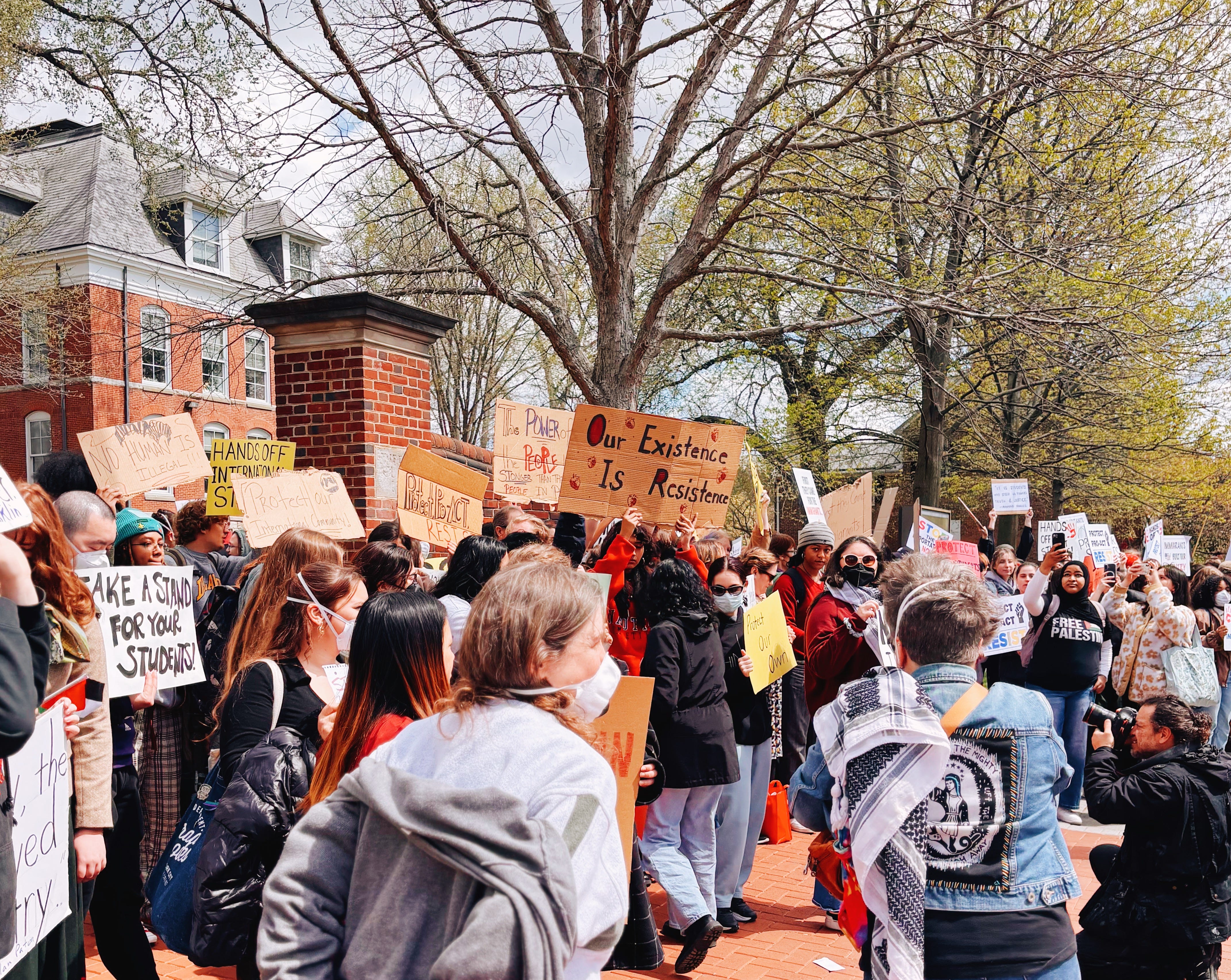
As a long-time resident of the state of Delaware,
Having worked in politics on a presidential campaign headquartered in the state of Delaware,
As a current student of the University of Delaware,
As a mother of children currently attending public schools and Universities within the state of Delaware,
And as a resident who pays attention,
I see a lot of what Delaware is lacking. Equity in education is one of those things. However, I also see how Delaware can frame thoughts and conversations around improving educational and cultural equity. Because what remains most important is our children, who are the future.
Delaware, as small as she may be, is growing. While it is exciting to see the “First State” gain recognition and popularity as it continues to expand, I am equally concerned that district and community leaders are not interested in adapting to new families' cultural and diversity-related needs.
From 2010-2020, the state of Delaware saw a 10.2% increase in its population (based on stats from the U.S. Census); from 2023–2024, it saw a 1.49% increase—and these numbers don't appear to be slowing down any time soon.
According to a 2024 Appoquinimink school district referendum, the district experienced a 17% increase in student growth within the past 5 years (from 2019–2024), equating to the addition of nearly 2,000 students.
The expedited rate of growth and potential for overcrowding is not just an Appoquinimink district concern—educational referendums have been popping up across the state over the past several years due to its expanding, steady rate of growth—one of the fastest growing in the country (currently #9 out of 50 states with a growth rate of approximately 1.5% per year, according to data reported by the U.S. Census Bureau).
Statistically, Delaware continues to experience a gradual decrease among white-identifying people while minorities, most notably people who identify as Black, Hispanic, Asian, and mixed-race, have seen a gradual increase in growth each year.
So, when superintendents and school board members hold conservative, nationalist ideologies, it becomes a concern—not only for my own family, but for the thousands of international and culturally diverse families within my district (and state) whose beliefs, holidays, faiths, and cultures—have not and are not being included or considered in conversations.
Delaware will hold its annual school board elections on Tuesday, May 13, 2025.
In my local district (Appoquinimink), the two candidates running alongside Dr. Sandhya Celestin-Brown leave much to be desired.
Dr. Celestin-Brown is the only candidate who has addressed and recognized the importance of inclusivity and equitable learning, which is essential to promoting a positive learning environment for children and students. She is also the only candidate who responded (thoroughly and thoughtfully) to the ACLU of Delaware’s school board candidate questionnaire—the other two candidates—both conservative, republican white men—seem to have a greater focus on business and politics than addressing the deep-rooted issues that lie within the district’s foundation. Both men also refused to respond to the ACLU’s questions, likely due to fear of accountability.
I’m tired of the “it’s not about politics” excuses. You are correct if you believe school board elections are not about politics. However, using that excuse as a justification or guise to dismiss the atrocities America is currently experiencing (by labeling them as “political”) is cowardly. The statements and affirmations needing to be proclaimed are not about politics—they are about the safety, protection, and security of the families in which the board serves.
Schools also have an integral duty to their constituents (students and families) to uphold these values and stand up for students and families (especially those at a higher risk of being targeted). Sadly, in Delaware, not much of that is being done.
Authoritarianism is scary, I know. But the silence is deafening. We have seen dictators and terrorists in action throughout history; we know how to combat them. Capitulation is a sure way to fail.
Goldey-Beacom College of Wilmington has joined other universities and institutions in the AAC&U’s Call for Constructive Engagement.
The University of Delaware has yet to make a statement.
Delaware State University has yet to make a statement.
Most K-12 school districts have not yet made statements.
As countries across the world are issuing advisories against travel to the United States and citizens are sent to torture camps in South America, it would be remiss not to admit that we are all in grave danger. Donald Trump, an autocrat and aspiring dictator, is actively shredding the 237-year-old Constitution as it currently stands in an attempt to expel those whom he deems inferior.
Families deserve to be informed. Students deserve to be reassured that their schools will do everything in their power to protect them, and that means speaking up, speaking out, and proactively confronting the lawlessness of the U.S. regime—Not capitulating to it.
That means that schools will thoroughly train and educate their staff on how to address illegal ICE arrests, violations of student rights (FERPA, etc.), and communicate to families how they will address and combat these threats against children and students going forward.
Families should not fear sending their children to school.
Students should not fear the illegalities of green card revocations occurring while attending Universities and colleges. Not in America.
But they do now.
I will continue to say—Delaware could be an example in setting a precedent for the rest of the nation to follow. As the first state to ratify the Constitution in 1787, will we lead by example to affirm our stance on upholding it?